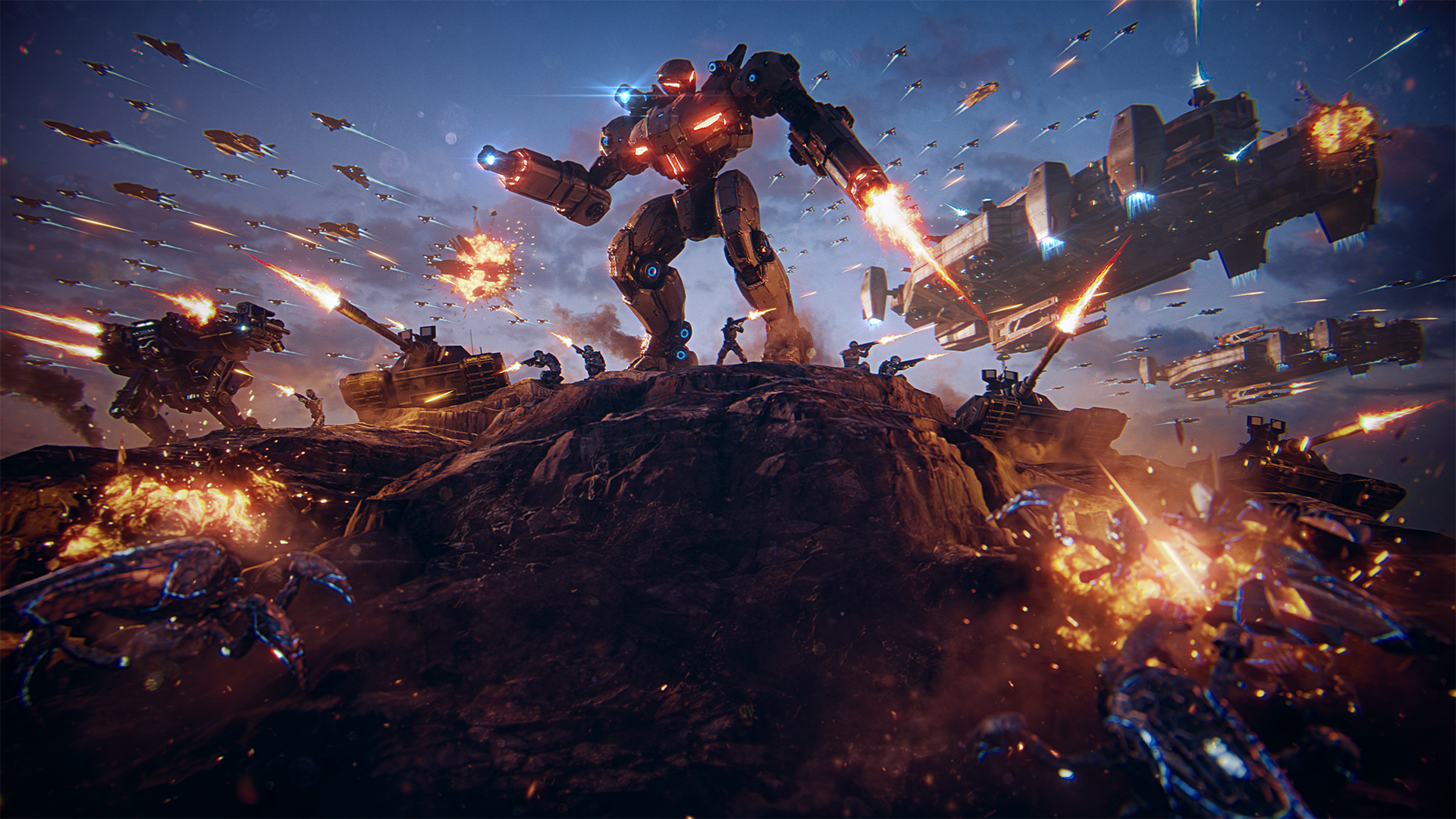
When it comes to pure, unadulterated scale, few real-time strategy titles match the sprawling ambition of Oxide Games' legacy. The core question on every grand strategy fan's mind regarding Ashes of the Singularity 2 is simple: does this sequel successfully build on the lineage of Supreme Commander? The short answer is yes and no. While the game retains its breathtaking, explosion-riddled battlefield size, a poor campaign, an uninspired new faction, and an over-reliance on generative AI undermine an otherwise promising RTS package.
The Engineering Marvel: Streamlined Army Management and UI
Before unpacking the game's flaws, it is essential to praise Oxide Games for fixing one of the genre's most notorious hurdles: microscopic micromanagement. Ashes of the Singularity 2 streamlines base-building and unit deployment into a remarkably intuitive format.
- Automated Army Assembly: Units are automatically assigned to armies during the recruitment phase, removing tedious grouping chores.
- Frontline Reinforcements: Players can replenish lost units at the press of a button or set armies to reinforce automatically from nearby production structures.
- Minimized Menus: Upgrades and resource harvesters can be built directly from resource nodes or via on-screen prompt buttons, keeping players immersed in the combat.
However, this slick interface comes with a trade-off. Unit recruitment is strictly bottlenecked to one unit per production building type, making it harder to pull off highly specialized, fast-adapting maneuvers on the fly.
The Campaign Slog and the Vanilla United Earth Forces
Where the sequel truly stumbles is its single-player offering. The newly introduced United Earth Forces (UEF) faction serves as the narrative anchor for the ten-mission campaign, yet it feels entirely outclassed by the legacy Post-Human Coalition and the robotic AI Substrate. The UEF trades personality for a generic sci-fi aesthetic, complete with tiny human soldiers and standard tanks that quickly get lost in the visual noise of large-scale engagements.
The 10-mission campaign itself is split into an overly hand-holding tutorial phase and a mildly more challenging second half set across the solar system. Unfortunately, the narrative underpinning these missions feels like an interminable philosophy lecture on artificial intelligence. Spanning roughly four to five hours, the entire campaign feels dated when compared to the meticulous pacing of modern genre competitors.
Ashes of the Singularity 2 proves that no amount of colossal battlefield scale can save a campaign weighed down by a convoluted, uninspiring story and lifeless AI-generated assets.
The Generative AI Controversy in RTS Storytelling
Perhaps the most divisive element of Ashes of the Singularity 2 is its integration of generative AI. According to the game's Steam transparency disclosures, AI was utilized for post-processing effects, cutscene animation composition, and ElevenLabs stock voices for minor characters.
For veterans who grew up on the brilliantly campy live-action FMVs of Command & Conquer or the cinematic grandeur of StarCraft 2, the sterile, plasticky look of the AI-generated character portraits and strangely intoned voice barks feels like a massive step backward. Real-time strategy storytelling has always thrived on human charm and theatrical eccentricity—qualities that automated tools simply cannot replicate.
Skirmish Mode: Where the Sequel Shines
If the campaign and narrative elements are a write-off, the skirmish and multiplayer modes rescue the title from total obscurity. Setting up a multi-way grudge match against custom-difficulty AI allows players to fully appreciate the sheer logistical beauty of commanding multiple armies across sprawling frontlines. Want to stay ahead of all future updates, hardware benchmarks, and strategy breakdowns? Join the conversation with our community across the web! Check out The Nerd Bureau on YouTube, follow us at @TheNerdBureau on X, drop a like on The Nerd Bureau on Facebook, and see our latest visual highlights on @thenerdbureau on Instagram.